Blog

  • Why Do You Need a Website for Your Business?

    In today’s digital age, having a website is no longer optional—it’s essential for any business that wants to stay relevant and competitive. Whether you’re a small local shop or a growing company, your website acts as your online storefront, open 24/7 to anyone searching for your products or services.

    A website builds credibility. When potential customers search for your business, the first thing they often look for is your website. Without one, you risk appearing less professional or even invisible compared to competitors who have a strong online presence. A well-designed site instantly communicates trust, reliability, and legitimacy.

    It also expands your reach. With a website, your business is not limited to walk-in customers or local marketing. Anyone with internet access can discover your products, services, and story. This exposure creates opportunities to attract new audiences, grow your customer base, and increase revenue.

    More importantly, a website allows you to showcase your brand on your terms. From highlighting your unique value, sharing testimonials, and publishing blogs, to integrating online booking or e-commerce features, your site becomes a powerful tool for engaging customers and driving sales.

    Finally, your website works as a central hub for all your marketing efforts. Social media, email campaigns, and online ads all point back to your website, where potential customers can learn more and take action.

    In short, a website is more than just a digital presence—it’s a business necessity. It establishes credibility, widens your reach, and becomes the foundation for your online growth. If you want your business to thrive in today’s competitive market, having a website isn’t just recommended—it’s required.


  • Why Every Business Needs a Website Maintenance Plan

    For many business owners, launching a website feels like the finish line—but in reality, it’s just the beginning. A website, much like any business asset, needs regular care to stay secure, functional, and effective. This is where a website maintenance plan becomes essential.

    Technology evolves quickly, and without regular updates, your website can become outdated or vulnerable to security risks. Hackers often target websites with weak security, but ongoing maintenance ensures software updates, plugin upgrades, and patches are applied on time to protect your business and customers.

    Routine maintenance also covers backups and performance checks. A sudden crash or data loss can be devastating, but having consistent backups gives peace of mind that your data is safe. Performance checks ensure that broken links, slow load times, or technical glitches don’t frustrate visitors or hurt your SEO rankings.

    Speaking of SEO, maintenance plays a huge role in keeping your site visible on search engines. Search engines prioritize active, secure, and well-maintained websites. On the other hand, outdated websites with errors are penalized, leading to a drop in traffic and lost opportunities.

    Ultimately, a website maintenance plan is not just about avoiding problems—it’s about preventing them. It ensures your website remains a reliable tool that supports your brand, attracts customers, and drives growth. In the long run, this proactive approach saves time, money, and protects your reputation.

  • From Clicks to Customers: How SEO Drives Growth

    Many business owners measure online success by the number of visitors their website receives. While traffic is important, it’s not the ultimate goal. The real success lies in converting those visitors into paying customers—and that’s where SEO makes a big difference.

    SEO is more than just attracting clicks. A well-executed strategy focuses on bringing in qualified traffic—people who are already looking for the products or services you provide. For example, someone searching for “best home renovation contractor in Pasay City” is already interested in what you offer. By optimizing for such intent-driven keywords, your website attracts people who are more likely to engage and convert.

    Beyond keywords, SEO also improves the user experience. A well-optimized website is fast, mobile-friendly, and easy to navigate. Visitors who can quickly find what they need are more likely to trust your brand and make a purchase or booking. Add to this high-quality content that answers their questions, and you’ve got a recipe for turning casual visitors into loyal customers.

    What makes SEO powerful is its ability to work 24/7. Unlike traditional marketing, your optimized website never stops attracting, engaging, and converting visitors. This continuous process of transforming clicks into customers drives sustainable business growth without requiring constant ad spending.

  • Customized SEO: Helping Small Businesses Compete Big

    In today’s fast-paced digital marketplace, small businesses often find themselves competing against bigger brands with larger budgets and stronger online presence. However, search engine optimization (SEO) is a powerful equalizer. With the right customized SEO strategy, even small businesses can attract the right audience and compete on a larger scale.

    Customized SEO is not about using generic formulas. Instead, it’s about crafting strategies that specifically align with your business goals, industry trends, and target audience behavior. Unlike one-size-fits-all solutions, personalized SEO involves a complete assessment of your website—its structure, content, and performance—and then creating a roadmap that focuses on your unique strengths while addressing weaknesses.

    For small businesses, local SEO is especially valuable. By optimizing for local searches, your business can appear in maps, local directories, and “near me” searches that capture people actively seeking your products or services. This means your business doesn’t just appear online—it appears in front of the right people, at the right time.

    The real advantage of customized SEO lies in its long-term impact. Instead of spending excessively on paid ads, small businesses can build organic visibility, credibility, and consistent traffic that translates into loyal customers. With a tailored SEO approach, competing with big companies is no longer out of reach—it’s a practical and achievable goal.

  • SEO with AI: How Artificial Intelligence is Reshaping Search Optimization

    SEO with AI: How Artificial Intelligence is Reshaping Search Optimization

    Smarter Keyword Research and Content Strategy

    Content Generation and Optimization

    Predictive Analytics and User Behavior

    AI in Technical SEO

    Voice Search and AI Assistants

    Conclusion

  • Digital Marketing and SEO: A Powerful Partnership for Online Growth

    Digital Marketing and SEO: A Powerful Partnership for Online Growth

    What Is Digital Marketing?

    Where SEO Fits In

    • Keyword research
    • On-page optimization (titles, headings, meta tags)
    • Quality content creation
    • Link building
    • Mobile and speed optimization
    • Technical audits

    Why They Work Better Together

    • SEO brings organic traffic, while digital ads bring quick, targeted exposure.
    • Content created for SEO (like blogs or landing pages) can be repurposed for email newsletters or social media posts.
    • Analytics tools used in digital marketing help refine your SEO strategy based on user behavior and conversions.

    The Benefits of Integrating SEO into Your Digital Strategy

    • Higher search engine rankings = more visibility and trust
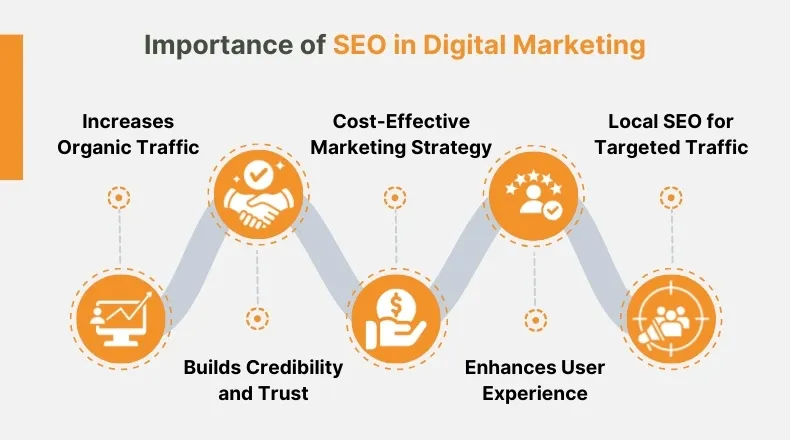
    • Cost-effective lead generation through organic traffic
    • Improved user experience, which supports other marketing efforts
    • Stronger brand authority in your niche
    • Data-driven insights for better marketing decisions

    Final Thoughts

  • Web Design and SEO: Building Websites That Rank and Convert

    Web Design and SEO: Building Websites That Rank and Convert

    The Connection Between Web Design and SEO

    • Site structure affects how search engines crawl and index your pages
    • Mobile responsiveness is now a key ranking factor
    • Fast loading speed improves both SEO and user experience
    • Navigation and internal linking help users (and search bots) explore your content
    • Clean code and semantic HTML make it easier for search engines to understand your site

    Design That Supports Search Visibility

    • Using headings properly (H1, H2, etc.) to guide users and signal page structure to Google
    • Placing keywords naturally in titles, meta descriptions, and image alt texts
    • Designing with content in mind, ensuring it’s easy to read and digest
    • Creating an intuitive layout that reduces bounce rates and encourages engagement
    • Optimizing for mobile devices, since more than half of users browse via smartphones

    Why It Matters

    Final Thoughts